
Stop Burning Fuel for Power:
How Fleets Save with Battery Systems
Every hour a work vehicle idles on site, it burns about a litre of diesel or petrol... for zero kilometres travelled.
A fleet of 50 vehicles racking up 1-2 idle hours a day is pouring fuel into thin air. Zeliox replaces idling with battery power that charges while you drive.
Idling Is the Most Expensive Way to Make Power
When a tradie or field tech needs power for tools, chargers, or a laptop, the default move is to leave the engine running. It feels free because the fuel gauge barely moves — but across a year, a single vehicle can burn through hundreds of dollars of fuel without turning a wheel.
- Idle Fuel Rate
- 1.7 L/hr
- Daily Idle
- 1–2 hrs
- Annual Fuel Waste
- ~$860–$2,580
- Fleet of 50
- ~$43k–$129k
- Kilometres Earned
- Zero
Charge While Driving, Work Engine-Off
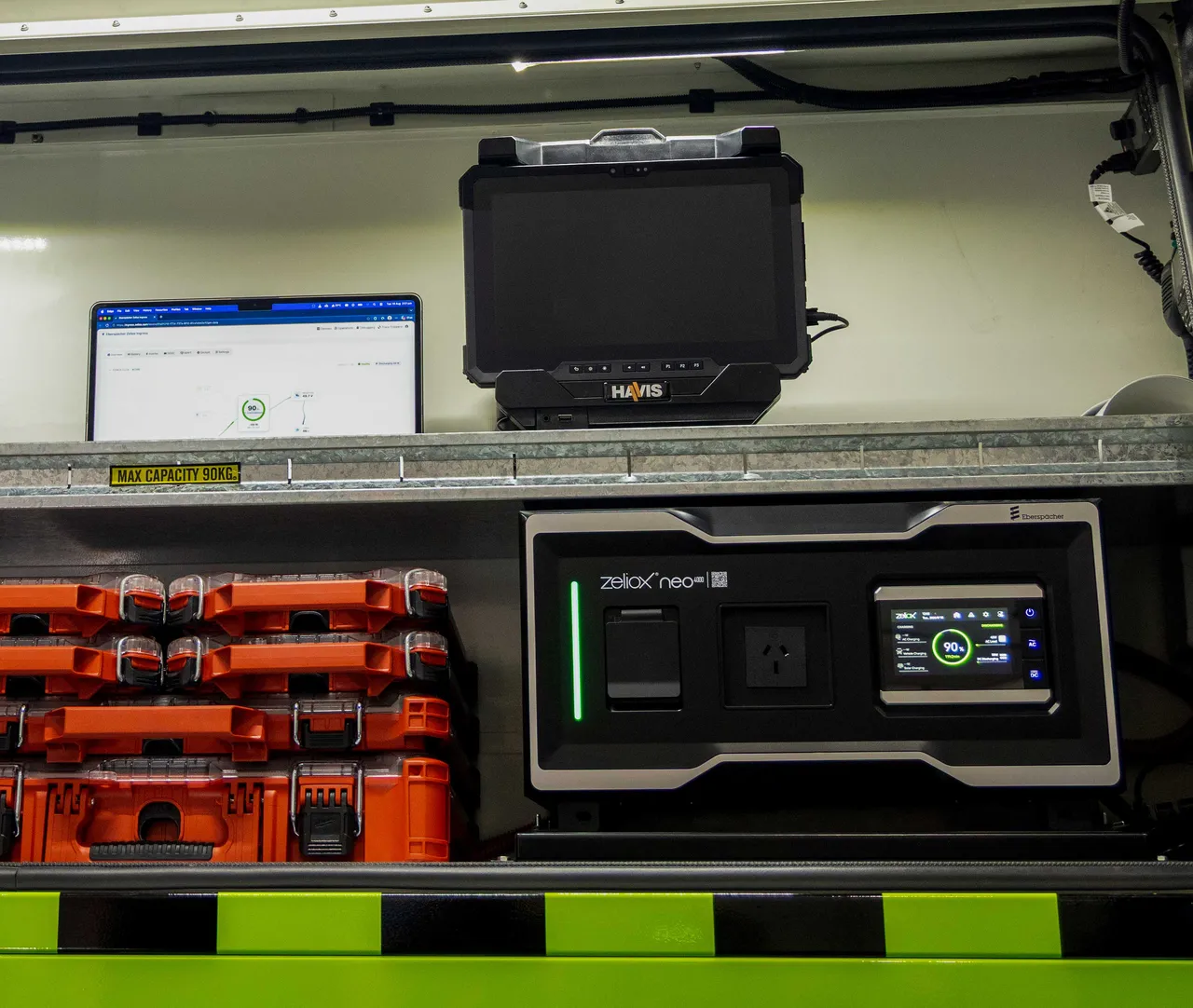
A Zeliox system stores power from the alternator while the vehicle moves, then delivers 240V on site with the engine off. Every idle hour eliminated goes straight to the fuel budget. With solar input as a bonus, the system can top up on site without starting the engine at all.
- Engine Off: Tools still powered
- Drive Charging: Alternator input
- Solar Ready: Built-in MPPT
- Silent Output: 0 dB on site
- Zero Fuel Cost: Battery power
- Fleet Fit: Utes, vans, service bodies
Stop paying for power you are not driving.
Before & After Zeliox
Before Zeliox
After Zeliox
Frequently asked questions
How much fuel can Zeliox save per vehicle?
A light commercial vehicle idling 1–2 hours a day over 230 working days burns roughly $860–$2,580 of diesel a year, at 1.7 L/hr and $2.2 a litre. Zeliox replaces that idle burn with battery power on site.
Does the system recharge fast enough between jobs?
Yes. The alternator charges the Zeliox battery while driving, so it is typically ready by the time you reach the next site.
Start with what you need to power
Tell us what needs to run and for how long. We will help you work through the options.
Work it out
What is idling actually costing you?
Zeliox runs the hotel and appliance load. It does not replace cab air conditioning, so it cannot displace every idling hour.
AssumptionsEdit any of these
US ATA-sourced, directionally applicable. Off by default because it is not Australian data.
Methodology
Every figure here is an estimate from the assumptions shown, not a quote. Actual results depend on duty cycle, fuel price and equipment.
Charging cost is subtracted even when the unit charges from the alternator or solar. Treating that as shore power overstates cost and understates saving; the conservative bias is deliberate.
Zeliox Sales Data Pack (February 2026) states these are modelled estimates that have not been independently verified through published fleet case studies, and that no published quantification of Australian idling exists at this time.
- Diesel
- $2.2/L — AIP weekly diesel, 12-month average 208.5 cpl, rounded up
- Idle burn
- 2.8 / 1.7 L/hr — TER, Motor Vehicle Engine Idling in Australia (2020), hosted by NSW EPA — large diesel truck
- Electricity
- $0.33/kWh — AER Default Market Offer 2026-27, marginal rate with the daily supply charge stripped out
- Diesel CO₂
- 2.7 kg/L — National Greenhouse Accounts Factors 2025, DCCEEW
- Labour
- $125/hr — Zeliox price sheet fitting rate; 2026 AU mobile auto-electrician average $128
- Reviewed
- 2026-08-09 · reviewed quarterly
Want this as a dated PDF report, with the full methodology? Ask us for it.