Fleet ESG Reporting: How Idle Reduction Moves the Needle on Every Metric That Matters
ESG reporting has moved from voluntary to unavoidable. Investors want it. Insurers are factoring it into premiums. Procurement teams at major corporations require it from their suppliers.
ESG reporting has moved from voluntary to unavoidable. Investors want it. Insurers are factoring it into premiums. Procurement teams at major corporations require it from their suppliers. And for fleet operators, it's no longer a question of whether to report but rather a question of what actually moves the needle.
The best answer for any fleet running diesel vehicles: idle reduction.
Cutting engine runtime while parked is one of the fastest, most measurable sustainability wins available to fleet operators. It feeds directly into Scope 1 emissions. It shows up in fuel consumption data that most fleets are already tracking. And unlike supply chain audits or building retrofits, it doesn't require capital expenditure beyond the systems that enable it.
This article covers how idle reduction fits into a serious ESG framework, what the numbers look like across different fleet profiles, and how to structure your reporting so it accurately reflects what you're achieving.
Why Fleet Idling Is an ESG Problem Nobody Is Talking About
Most ESG conversations in fleet management focus on vehicle electrification. The narrative is compelling: zero tailpipe emissions, regenerative braking, lower operating costs over time. It's the direction the industry is heading.
But for commercial fleet operators running heavy vehicles today, electrification is a five-to-fifteen-year transition. The trucks on the road in 2026 will largely still be on the road in 2035. Whatever ESG commitments you've made to customers, investors, or regulators, you need to meet them with the fleet you have in the depot.
Idle reduction is where that fleet gets cleaner today.
A typical heavy vehicle idles between 1,000 and 1,800 hours per year. For a truck running eight hours a day, five days a week, that's roughly six weeks to three months of engine runtime on a vehicle that isn't moving. Every hour of idling burns 2 to 4 litres of diesel, generates heat that accelerates engine wear, and produces emissions that count against your Scope 1 footprint — whether you're reporting them or not.
The math is straightforward. A single truck idling three hours per day over a working year consumes roughly 2,700 litres of diesel that contributed nothing to productivity. Multiply that across a 50-truck fleet and you're looking at 135,000 litres — and the corresponding carbon equivalent — that could be eliminated with the right infrastructure in place.
This isn't a marginal improvement. For fleets where idle hours represent 15–25% of total engine runtime, idle reduction can be the single largest driver of emissions reduction available without replacing the vehicles themselves.
The ESG Metrics That Actually Improve With Idle Reduction
Scope 1 Emissions — The Direct Hit
Scope 1 covers direct greenhouse gas emissions from owned or controlled sources. For a diesel fleet, that includes fuel combustion in engines — including engines running while parked.
The carbon math for diesel is well established. Using the DCCEEW 2024 National Greenhouse Accounts Factors, one litre of diesel produces approximately 2.68 kilograms of CO₂ when burned (scope 1 emission factor). A truck idling at 3 litres per hour therefore generates about 8 kilograms of CO₂ every hour — roughly 24 kilograms over an eight-hour rest period.
At an annual fleet level, this compounds significantly:
- 1 truck, 8 hrs/day idle, 300 days/year: 7,200 kg CO₂
- 50 trucks: 360,000 kg CO₂ (360 tonnes)
- 200 trucks: 1,440,000 kg CO₂ (1,440 tonnes)
These aren't abstract numbers. They represent the difference between a fleet that can report genuine Scope 1 reductions and one that relies on offsets to make its numbers work. For companies with Science Based Targets initiative (SBTi) commitments, eliminating idle-generated emissions is one of the most direct ways to demonstrate alignment with a 1.5°C pathway.
Fuel Consumption — Scope 3, Category 1
Most large organisations report fuel combustion under Scope 3, Category 1 (purchased goods, upstream emissions from fuel production and distribution). Even if your fleet's direct emissions fall outside your reported Scope 1 boundary, fuel consumption data feeds into Scope 3 calculations that your customers and partners are increasingly requesting.
Idle reduction reduces this figure from two directions: less fuel purchased and less fuel burned. Both lower reported upstream emissions. And critically, both are verifiable through the telematics data your fleet is almost certainly already collecting.
Australian Regulatory Framework for Fleet ESG Reporting
Australian fleet operators face a distinct regulatory landscape that differs from U.S. and EU frameworks.
And it's tightening rapidly.
The NGER Act 2007 (National Greenhouse and Energy Reporting) mandates annual reporting of greenhouse gas emissions, energy production, and energy consumption for corporations exceeding threshold levels. For fleet operators, this means idle-generated Scope 1 emissions are already reportable under NGER if your organisation meets the reporting threshold.
The Safeguard Mechanism (established 2016, strengthened 2023) requires large emitters to keep net emissions below declining baselines, currently reducing at 4.9% per year. Fleet operators whose organisations exceed the Safeguard threshold must demonstrate genuine emissions reductions, and idle reduction is one of the most measurable ways to do so.
From 1 January 2025, Australian Sustainability Reporting Standards (ASRS) - specifically AASB S2 - require large entities to report climate-related financial disclosures, including Scope 1 and Scope 2 emissions. This is Australia's equivalent of the EU's CSRD and will progressively extend to smaller entities.
The Clean Energy Regulator administers the Emissions Reduction Fund (ERF) and Australian Carbon Credit Units (ACCUs). Under the ERF, quantified emissions reductions from verified idle reduction programmes may be eligible to generate ACCUs, providing a direct carbon credit revenue stream. Note: the former Carbon Farming Initiative was merged into the ERF in 2014. Current credit methodology is under the ERF/ACCU Scheme.
Browse the Range
Equipment Lifespan and Waste (Scope 3, Category 5)
Engine hours are a primary determinant of maintenance intervals and component replacement schedules. An engine accumulating 3,000 hours per year in a high-idle fleet will require more frequent oil changes, filter replacements, and earlier replacement of exhaust after treatment systems (fuel injectors, turbochargers, EGR components) than the same engine running the same distance with lower idle hours.
From an ESG perspective, shorter equipment lifecycles mean greater manufacturing impact embedded in your reported Scope 3 Category 5 (waste from operations) and Category 2 (capital goods). Every hour of unnecessary idle runtime accelerates the clock on those costs.
Driver Retention and Social Licence (Scope 3, Category 6)
This dimension doesn't appear in most fleet ESG frameworks yet... but it should.
The transportation industry is experiencing a persistent driver shortage. Driver turnover rates in Australian trucking consistently exceed 30% annually, and the cost of replacing a single driver sits between $10,000 and $15,000, including including recruitment, onboarding, and lost productivity.
Driver comfort is a retention factor. Drivers who can rest properly in their cabs without idling - that is - climate-controlled, with power available and CPAP running, are more likely to stay with a fleet that treats their working conditions as a priority. That's a social licence issue. Fleets that communicate their idle reduction programs to drivers and demonstrate genuine investment in their working environment report measurable improvements in driver satisfaction scores.
Lower turnover means fewer training cycles, reduced Scope 3 Category 6 (employee commuting and training) embedded impact per kilometre, and stronger relationships with the communities where drivers live and work.
Building an ESG Reporting Framework for Idle Reduction
The data required for credible idle reduction reporting isn't exotic. Most fleets already have it. The challenge is structuring it to speak to ESG frameworks rather than just operational efficiency.
Step 1: Establish a Baseline
Before you can report improvement, you need a credible baseline. Pull your telematics data for the past 12 months and segment engine runtime into:
- Driving hours: Engine running with vehicle in motion
- Idle hours, operational: Idling at docks, in queues, or during regulated rest periods
- Idle hours, discretionary: Idling for cab comfort, device charging, or personal use
- Idle hours, unnecessary: Warm-up idling, convenience idling, and other avoidable runtime
This segmentation matters because ESG reporting is fundamentally about measuring the reduction of unnecessary impact. Reporting total idle hours without distinguishing between operational necessity and discretionary waste makes it impossible to credibly claim reductions that come from addressing only the latter.
A Zeliox power system eliminates discretionary idle hours almost entirely — while preserving the ability to idle when it genuinely serves a purpose. That distinction is what makes the reporting story both honest and defensible.
Step 2: Quantify the Impact in Standard Units
ESG frameworks require standard units. For idle reduction, that means:
- Litres of diesel saved (idle hours eliminated × average idle fuel consumption rate)
- Tonnes of CO₂e avoided (litres saved × emission factor)
- Engine hours not accumulated (idle hours eliminated)
- Maintenance events deferred or avoided (calculated from engine hour intervals)
Australian fleets can reference the National Greenhouse Accounts Factors published by the Department of Climate Change, Energy, the Environment and Water (DCCEEW) for standard emission factors. The Clean Energy Regulator's Emissions Reduction Fund (ERF) and Australian Carbon Credit Unit (ACCU) Scheme provide a framework for quantifying emissions reductions from reduced stationary engine operation — one that some fleets have already adopted as a reporting template. Note: the former Carbon Farming Initiative was merged into the ERF in 2014; current methodology uses the ERF/ACCU framework.
Step 3: Report Against Specific Commitments
The credibility of ESG reporting lives in specificity. "We reduced idle hours" is a claim. "We reduced discretionary idle hours by 1,400 hours per month across our 40-truck fleet, eliminating 12.6 tonnes of CO₂e per month and $8,820 in monthly fuel spend" is a metric.
Match your reporting to the frameworks your stakeholders are using. The GRI Standards (Global Reporting Initiative) include specific guidance on energy consumption (GRI 302) and emissions (GRI 305) that fleet operators can reference directly. If your customers or investors are requesting CDP disclosures, the same idle hours and fuel data maps directly to Scope 1 and Scope 3 Category 1 reporting.
Step 4: Demonstrate Additionality
ESG stakeholders want to know that your reductions are real, not double-counted, and additional to what would have occurred regardless.
For idle reduction, additionality means demonstrating that reductions were achieved through an intentional program — not simply because a driver happened to idle less. Document the infrastructure changes (e.g., Zeliox all-day battery power systems installed fleet-wide), the policy changes, and the monitoring systems in place to sustain the reduction over time.
This is also where the operational idling distinction becomes critical. Reporting a 40% reduction in idle hours — with operational idle hours held constant while discretionary idle hours dropped to near zero — is a far more credible story than a blended average that conflates the two.
The Business Case Beyond ESG
ESG reporting frameworks are formalising rapidly, but the case for idle reduction doesn't depend on a single disclosure to stand on its own.
The fuel savings alone are compelling:
| Fleet Size | Idling Reduction/Mo | Fuel Saved/Mo | Fuel Saved/Ann |
|---|---|---|---|
| 10 Trucks | 700h | 2,100L | $70,560 |
| 50 trucks | 3,500h | 10,500L | $352,800 |
| 100 trucks | 7,000h | 21,000L | $705,600 |
Maintenance savings are harder to quantify precisely without fleet-specific data, but industry consensus holds that reducing engine hours by 15–25% proportionally extends component life. For a truck with a first major service threshold of 15,000 engine hours, operating with 20% fewer hours per year pushes that service further out — reducing downtime, parts costs, and the administrative overhead of managing scheduled maintenance.
Driver retention improvements are equally tangible. Reducing annual driver turnover by just 5 percentage points — from 30% to 25% — on a 50-truck fleet saves approximately $25,000 to $50,000 per year in recruitment and training costs alone.
These figures complement the ESG benefits rather than replacing them. A fleet that can report genuine Scope 1 reductions, improved driver welfare metrics, and lower operational costs from the same investment has a story that resonates with investors, customers, insurers, and drivers alike.
What Genuine ESG Commitment Looks Like in Practice
There's a meaningful difference between reporting on ESG and operating as an ESG-led business. The fleets genuinely moving the needle share a few defining characteristics:
They measure what matters. Idle hours, fuel consumption, engine runtime, all tracked at the vehicle level, not the fleet average. Individual vehicle data is where the real stories emerge: the outlier truck idling at twice the fleet average, the depot where idle rates spike, the driver cohort that responded well to new infrastructure.
They set targets, not just reports. "We reduced idle hours" becomes meaningful when paired with "we committed to a 40% reduction by Q4 2026 and are on track to achieve it." Targets create accountability and give stakeholders a clear basis for evaluating performance.
They tie procurement to ESG outcomes. Choosing Zeliox battery power systems for new fleet vehicles isn't just an operational decision — it's a Scope 1 commitment backed by measurable outcomes. Procurement decisions that specify idle-elimination capability as a requirement rather than an option accelerate the transition.
They communicate the story internally as well as externally. Drivers who understand why the fleet is investing in idle reduction infrastructure (and who see their own comfort and working conditions improve as a result) become active participants in the ESG story rather than obstacles to it.
The Zeliox Advantage for Fleet ESG
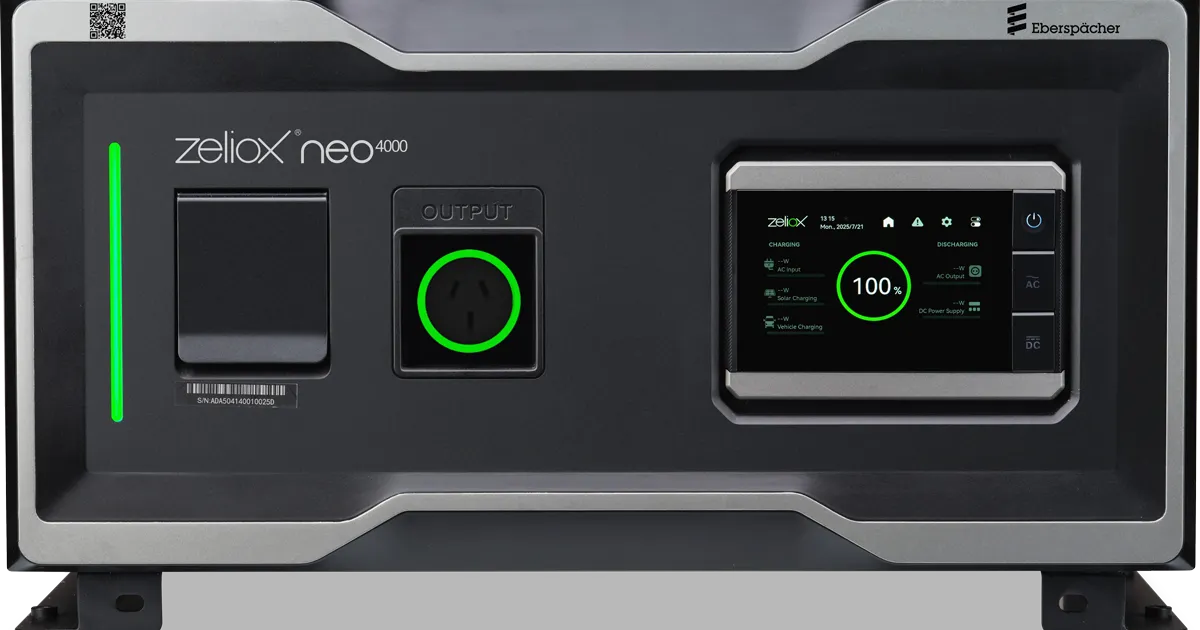
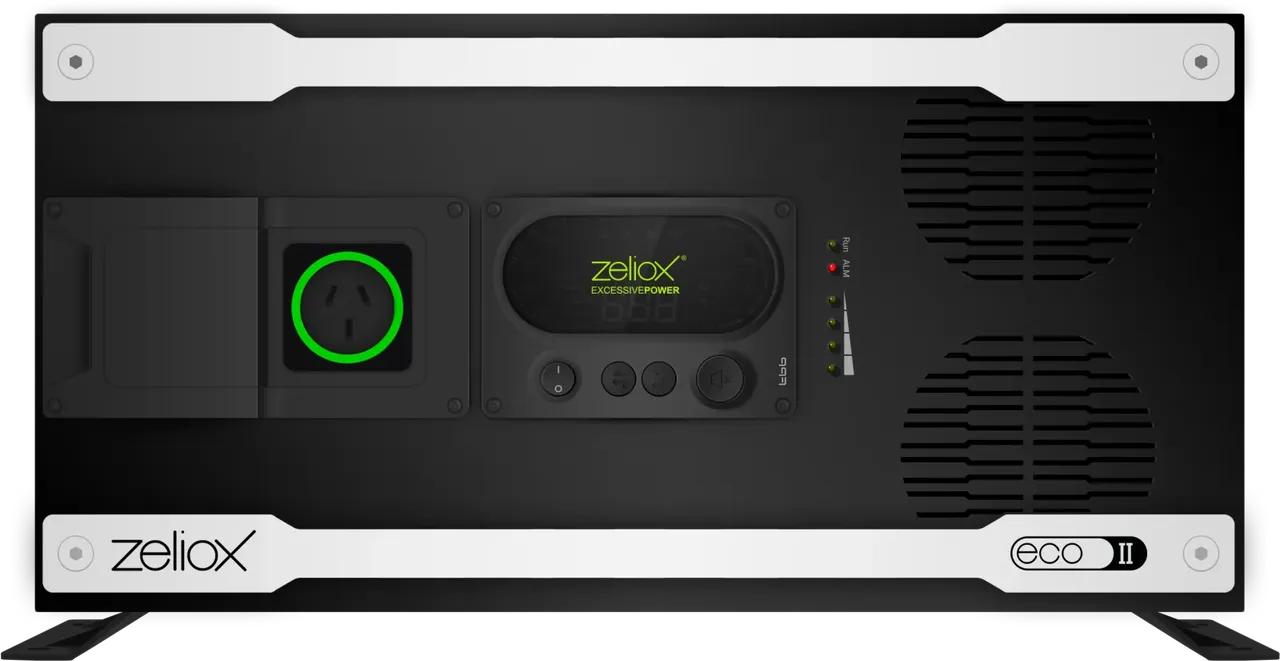
Zeliox delivers all-day battery power for commercial vehicles.
Climate control, device charging, CPAP, fridge, diagnostic equipment all runs without idling the engine. The transition is invisible to drivers in terms of what they give up, and transformative in terms of what the fleet gains: eliminated discretionary idle hours, verifiable Scope 1 reductions, and data that maps directly to ESG reporting frameworks.
For fleet managers building an ESG case, Zeliox provides:
- Documented idle reduction per vehicle (kWh drawn vs. diesel hours eliminated)
- Scope 1 emissions reduction data ready for GRI 302/305 disclosure
- Driver retention and welfare alignment supporting Scope 3 Category 6 reporting
- Equipment lifecycle extension supporting Scope 3 Category 5 waste reduction
- Fleet-wide installation and monitoring with a single procurement decision
The transition to a sustainable fleet future doesn't start at the dealership. It starts in the cab, with the decision to stop burning fuel for comfort when you don't have to.
If you'd like to understand what idle reduction looks like for your specific fleet profile including a modelling of Scope 1 impact and estimated fuel savings, reach out to the Zeliox team for a fleet assessment.
Zeliox. All-in-One power supply solutions for a sustainable future.
- sustainability